
KNUT Demands 60% Salary Increase For All Teachers In New CBA Proposal: Full Breakdown, Salary Increment Table, And What It Means For Teachers
KNUT Proposes 60% Pay Rise For Teachers In New CBA .
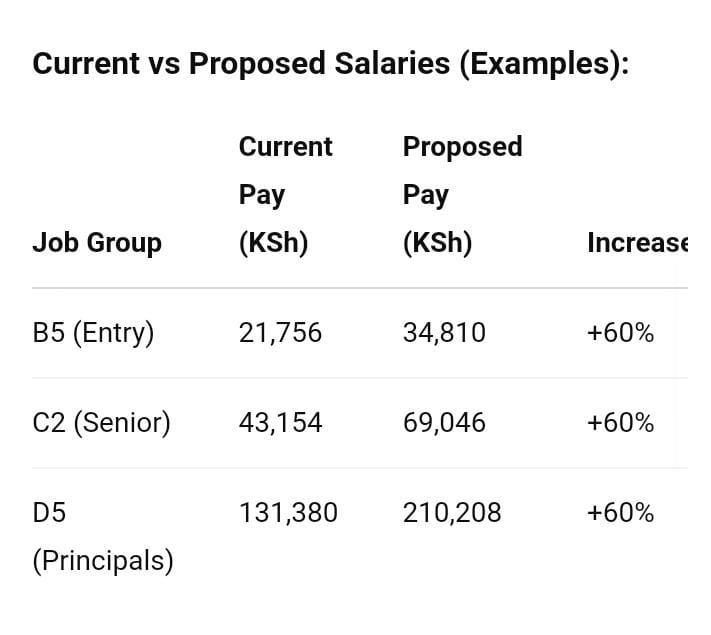
Kenya’s education sector is bracing for a major showdown as the Kenya National Union of Teachers (KNUT) tables an unprecedented 60% salary increase demand in their latest Collective Bargaining Agreement (CBA) proposal. This bold move, coming amid Kenya’s economic challenges, has sparked intense debate about teacher welfare, education funding, and national fiscal priorities.
Breaking Down KNUT’s CBA Proposal
Key Salary Increase Demands
KNUT is pushing for:
– 60% basic salary increment across all job groups
– Revised hardship allowances from 30% to 50% of basic pay
– New CBC implementation allowance at 20% of salary
– Backdated payments to July 2024 if delayed
Current vs Proposed Salaries (Examples):
Additional Benefits Sought
1. Enhanced medical cover including dental and optical
2. Housing allowance adjustment for inflation
3. Teacher mortgage scheme with 5% interest cap
4. Comprehensive life insurance coverage
Why KNUT is Pushing for 60% Now
Economic Justifications
– Inflation erosion: 2023-24 inflation has reduced purchasing power by ~25%
– Comparable professions: Lawyers, doctors received 40-50% raises recently
– CBA stagnation: Last meaningful increase was 2016 (7-10%)
Professional Considerations
– CBC workload: Teachers handling more subjects and learners
– Teacher exodus: Over 5,000 educators left for abroad jobs in 2023
– Performance pressure: National exams and competency assessments
KNUT Secretary-General Collins Oyuu argues:
“Teachers have absorbed economic shocks for years while ensuring learning continues. This correction is long overdue.”
Feasibility Analysis: Can Government Afford This?
Fiscal Realities
– TSC wage bill: Currently at KSh 300 billion annually
– Proposed increase: Would add ~KSh 180 billion yearly
– National budget: Education already gets 27% of total budget
Possible Funding Sources
1. World Bank teacher support program (KSh 50 billion)
2. Rationalizing non-essential expenditures
3. Gradual implementation over 3 years
4. County education budget reallocation
Stakeholder Reactions
Supportive Voices
– Parents Association: “Quality education requires motivated teachers”
– Education Experts: “Competitive salaries reduce brain drain”
– Opposition MPs: “Prioritize teachers over unnecessary expenditures”
Critical Perspectives
– Treasury Officials: “Would destabilize fiscal framework”
– IMF Kenya Team: “Against current austerity measures”
– Private School Owners: “Will create unsustainable pressure”
Historical Context: Teacher Salary Trends
– 2013: 50-60% increase implemented
– 2016: 7-10% modest raise
– 2020: Freeze due to COVID
– 2023: 2.5-9.5% adjustment (below inflation)
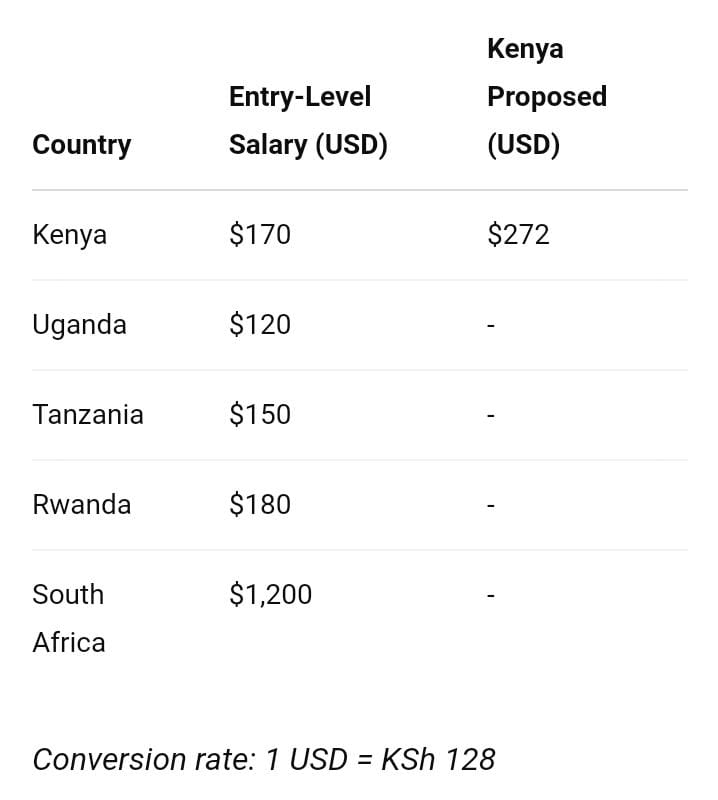
Comparative Analysis: Regional Teacher Salaries
Potential Compromise Scenarios
1. Phased Implementation
– 20% in 2025
– 20% in 2026
– 20% in 2027
2. Targeted Increases
– Higher % for lower job groups
– Performance-based components
3. Non-Monetary Benefits
– Enhanced housing solutions
– Better loan facilities
– Tax relief measures

What This Means for Teachers
Short-Term Expectations
– Protracted negotiations likely
– Possible work-to-rule actions
– Increased public debate
Long-Term Implications
– Potential brain gain if implemented
– Improved teacher retention
– Higher education standards
Action Plan for Teachers
1. Stay Informed
– Follow KNUT/TSC communications
– Attend branch meetings
2. Document Workload
– CBC preparation hours
– Extra-curricular activities
3. Engage Constructively
– Provide input through union channels
– Avoid premature industrial action
Conclusion: A Defining Moment for Kenyan Education
KNUT’s 60% demand represents a watershed moment in teacher welfare advocacy. While the figure appears ambitious, it highlights the urgent need to address years of salary stagnation amid rising living costs. The coming negotiations will test the government’s commitment to education as a national priority and could redefine the teaching profession’s status in Kenya.
As the debate unfolds, all stakeholders must balance fiscal responsibility with the undeniable truth that quality education depends on motivated, fairly compensated teachers. Visit our website http://www.teachersnewscenter.co.ke for daily updates and insight information on Kenya’s education sector.
KNUT Proposes 60% Pay Rise For Teachers In New CBA .
Related Posts
-
 TSC Approves Verification Exercise For The Following 3,000 Teachers: Full Details On Eligibility, Required Documents, And Timelines
-
 TSC Has Started Documents Verification Process & It’s Awarding 50 Marks To All Interns
-
 Breaking! Big Pay Boost For Teachers: TSC Unveils New Commuter Allowances In 2025–2029 CBA Phase 1 Negotiations
-
 Attention! TSC Issues New Requirements For 20,000 JSS Interns Ahead Of Permanent And Pensionable Recruitment Phase
About The Author
