
KNEC’s List Of 1000+ Schools That Are Yet To Register Grade 6 For KPSEA 2025 . Here’s The Full List
KNEC List Of Schools Yet To Register Grade 6 For KPSEA 2025 Exams.
The Kenya National Examination Council (KNEC) has raised an alarm over the delayed registration of Grade 6 learners for the Kenya Primary School Education Assessment (KPSEA) 2025. With the February 28th deadline fast approaching, more than 1,000 schools across the country are yet to complete the registration process. This delay has sparked concerns among educators, parents, and policymakers, raising questions about its potential impact on the learners and the broader education system. In this article, we’ll explore the reasons behind the delay, its implications, and what stakeholders can do to address the issue.
The KPSEA Registration Deadline: A Race Against Time
The KPSEA is a critical assessment tool designed to evaluate the competency-based curriculum (CBC) at the primary school level. It aims to measure learners’ mastery of skills and knowledge as they transition to junior secondary school. However, the registration process for the 2025 KPSEA has hit a snag, with over 1,000 schools yet to register their Grade 6 candidates.
KNEC has emphasized the importance of meeting the February 28th deadline, warning that late registration could lead to penalties or even exclusion from the assessment. This has left many schools scrambling to complete the process, while others remain unaware of the urgency.
Why Are Schools Lagging Behind?
Several factors have contributed to the delay in KPSEA registration. One of the primary reasons is the lack of awareness among school administrators. Many headteachers and principals are either unfamiliar with the registration process or unaware of the deadline. This highlights a gap in communication between KNEC and schools, particularly those in remote areas.
Read Also:KNEC Examiners, Contracted Professionals Are Yet To Receive Their Pay- Njengere Explains Why
Another challenge is the limited access to digital tools required for online registration. While KNEC has streamlined the process through its online portal, some schools lack the necessary infrastructure, such as computers and reliable internet connectivity. This has made it difficult for them to complete the registration on time.
Here’s The List Of Schools Yet To Register Their Grade 6 Candidates
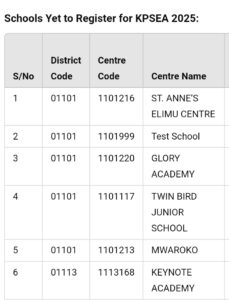
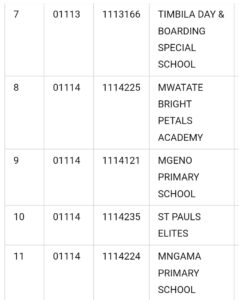
Additionally, financial constraints have played a role. Some schools are struggling to raise the required registration fees, leaving them in a difficult position as the deadline looms.
The Implications of Delayed Registration
The failure to register Grade 6 learners for the KPSEA 2025 could have far-reaching consequences. For the learners, it means missing out on a crucial assessment that determines their readiness for junior secondary school. This could disrupt their academic progression and create unnecessary anxiety for both students and parents.
For schools, late registration or exclusion from the assessment could result in penalties, including fines or reputational damage. Moreover, it could affect their ability to secure funding and resources, as KPSEA results are often used to evaluate school performance.
At a national level, the delay undermines the government’s efforts to implement the CBC effectively. The KPSEA is a cornerstone of the new curriculum, and any hiccups in its administration could erode public confidence in the system.
What Can Be Done to Address the Issue?
To ensure that all schools meet the KPSEA registration deadline, stakeholders must take immediate action. Here are some practical steps that can be taken:
1. Enhanced Communication and Awareness Campaigns
KNEC should intensify its efforts to inform schools about the registration process and deadline. This could involve sending reminders via SMS, email, and social media, as well as collaborating with county education offices to reach schools in remote areas.
2. Provision of Technical Support
Schools facing challenges with online registration should be provided with technical assistance. KNEC could set up help desks or hotlines to guide administrators through the process. Additionally, partnerships with tech companies could help bridge the digital divide by providing schools with the necessary tools and training.
3. Financial Assistance for Struggling Schools
The government and non-governmental organizations could step in to support schools that are unable to raise the registration fees. This could be done through grants, subsidies, or fee waivers for schools in underserved areas.
4. Extension of the Deadline (If Necessary)
While KNEC has emphasized the importance of adhering to the February 28th deadline, an extension may be necessary to accommodate schools that are genuinely struggling to complete the process. This would provide a safety net for learners and ensure that no one is left behind.
The Bigger Picture: Strengthening Kenya’s Education System
The delayed KPSEA registration is a symptom of broader challenges facing Kenya’s education system. From inadequate infrastructure to gaps in communication, these issues highlight the need for systemic reforms.
One area that requires urgent attention is the digitalization of education. As the world becomes increasingly reliant on technology, Kenya must invest in digital tools and training to ensure that all schools can participate in online processes like KPSEA registration. This will not only improve efficiency but also prepare learners for a tech-driven future.
Another critical area is stakeholder collaboration. The success of the CBC and its associated assessments depends on the collective effort of the government, schools, parents, and the private sector. By working together, these stakeholders can address challenges proactively and create an enabling environment for quality education.
A Call to Action: Ensuring No Learner Is Left Behind
As the February 28th deadline approaches, it is imperative for all stakeholders to act swiftly and decisively. Schools must prioritize the registration process, while KNEC and the government should provide the necessary support to ensure that every Grade 6 learner is registered for the KPSEA 2025.
Parents and guardians also have a role to play by following up with schools to confirm that their children are registered. After all, education is a shared responsibility, and every effort counts in shaping the future of Kenya’s learners.

Conclusion: A Pivotal Moment for Kenya’s Education
The delayed KPSEA registration is a wake-up call for Kenya’s education system. It underscores the need for better communication, improved infrastructure, and stronger collaboration among stakeholders. By addressing these challenges, we can ensure that the CBC achieves its intended goals and prepares learners for a bright future.
As we navigate this pivotal moment, let us remember that every child deserves the opportunity to succeed. By working together, we can overcome the current hurdles and build an education system that is inclusive, equitable, and future-ready.
KNEC List Of Schools Yet To Register Grade 6 For KPSEA 2025 Exams.
Related Posts
-
 KNEC Recruitment 2025: How To Apply For KCSE Assessor Positions – Full Requirements & Application Guide
-
 Has KNEC Paid All 2024 Invigilators And Supervisors? What Are The Reasons Behind Delayed Payment? KNEC Lists Reasons And Solutions For Those Who Missed Last Payment
-
 KNEC Portal: Exams , Results, Registration And Latest Guidelines In Kenya
-
 KNEC Update: KCSE Registration 2025 : KNEC Portal, Requirements , Fees, And Other Updated Details
About The Author
